
When someone you care about loses their mother, the silence in your own head can feel louder than the grief itself. You want to say something that helps, yet every sentence seems either too small or too clumsy. So you type a few words, delete them, and type again.
Here is the truth most people discover too late: the person who is grieving will rarely remember your exact words. They will remember that you showed up. A short, sincere message does more good than a long, polished one that arrives a week late, or never arrives at all.
This guide is built to remove that pressure. Below you will find 285 short sympathy messages for the loss of a mother, organised by relationship and situation, along with practical advice on tone, timing, etiquette, and follow-up. Every message is numbered, so you can easily find one, copy it, and personalise it with a detail only you would know.
Why the Loss of a Mother Is Different
Every loss hurts, but losing a mother carries a particular weight. A mother is often the first voice a person ever hears, the first person who ever believed in them, and the one who knew them before they knew themselves. When she is gone, many people describe feeling as though a part of their own history has gone quiet.
Understanding this helps you write a better message. Grief over a mother is rarely only about the death. It can include:
- The loss of daily comfort, such as the phone call that no longer comes or the voice that always asked, “Have you eaten?”
- The loss of identity, since being someone’s child is a role that shapes an entire life.
- The loss of shared memory, because she was often the keeper of family stories, recipes, and traditions.
- The loss of a safe place, since for many people a mother is the person they could always return to.
- Complicated feelings, since not every mother-child bond was simple, and grief can be mixed with regret, relief, or questions that will never be answered.
Because of this, the best sympathy messages are gentle, warm, and free of pressure. They do not try to fix the pain. They simply acknowledge it and offer company.
How to Write a Short Sympathy Message (A Simple Formula)
You do not need poetic talent. Most effective condolence messages follow a four-part pattern, and you can use as many or as few parts as the moment allows.
Step 1: Acknowledge the loss. Say plainly that you know what happened. “I just heard about your mother.”
Step 2: Express your sorrow. Keep it honest and simple. “I am so sorry for your loss.”
Step 3: Add something personal (optional, but powerful). A memory, a quality you admired, or a small detail about her. “I’ll always remember how she laughed with her whole face.”
Step 4: Offer presence, not just help. Instead of the vague “let me know if you need anything,” say something specific. “I’m thinking of you, and I’ll check in on you this weekend.”
Quick tips on tone
- Be sincere rather than clever. Plain words feel more real than decorated ones.
- Keep it short. Two to four sentences are enough.
- Use her name if you knew her. Hearing the name of a lost loved one can be a comfort.
- Do not ask for a reply. Make it clear they owe you nothing.
- Match their culture and beliefs. What comforts one family may feel out of place to another.
Short Sympathy Messages for Loss of Mother (General)
These work for almost anyone: a friend, neighbour, acquaintance, or relative.

- I was heartbroken to hear about your mother. I’m sending all my love your way.
- May the warmth she gave to others return to you tenfold in the days ahead.
- Your mother’s passing leaves a quiet space in so many hearts. I’m thinking of you.
- I’m truly sorry. May you be surrounded by people who love you right now.
- A mother like yours leaves footprints in every life she touches. Sorry for your loss.
- Please accept my warmest sympathy as you mourn your mother.
- I wish I could take even a little of this pain from you. Until then, I’m here.
- Love like hers doesn’t end. It simply changes shape. Thinking of you.
- Sorry to hear your mother has passed. May peace find you gently.
- She gave so much to the world, starting with you. Deepest condolences.
- I’m holding your family in my thoughts as you remember someone so dear.
- May every happy memory of her be a small light through this darkness.
- My heart aches for you. Your mother was truly one of a kind.
- Sending strength for the hard hours and comfort for the quiet ones.
- Please know that your sorrow is shared by everyone who loved her.
- Wishing you courage today and gentleness tomorrow.
- Her love was a gift, and you carry it wherever you go. I’m so sorry for your loss.
- In this tender time, may you feel held by those around you.
- I’m saddened beyond words by your mother’s death. You have my sincere sympathy.
- May the days ahead bring you rest, and may her memory bring you smiles.
- She was the heart of your family, and her absence will be felt deeply. Thinking of you all.
- I’m remembering your mother with great respect and fondness today.
- Please take all the time you need to grieve. There’s no schedule for this.
- Her kindness left a mark on everyone who met her. May that thought bring you comfort.
- I’m so sorry you’re hurting. Know that you’re cared for.
- Today I’m thinking of you and the extraordinary woman who raised you.
- May the stories she told and the love she gave stay close to you always.
- My sincere condolences to you and your family. She will be dearly missed.
- There’s nothing I can say to lessen this ache, but I can promise to stand beside you.
- Your mother’s love was real, lasting, and remarkable. May it carry you through.
Very Short Messages for Text and WhatsApp
Sometimes you only have the space, or the courage, for one or two lines. That is perfectly acceptable. These are ideal for text messages, WhatsApp, and direct messages.
- Thinking of you today. So sorry about your mum.
- Here if you need me. Always.
- Sending love and strength.
- Just wanted you to know I care.
- Heartfelt condolences to you and your family.
- No need to reply. Just know I’m with you.
- So sorry, my friend. Hugging you from afar.
- She was lovely. I’m thinking of you.
- You’re in my prayers tonight.
- Take it slow. I’ve got you.
- My heart is with you.
- Grieving with you today.
- Call me whenever, even at 3 a.m.
- Love and light to you and your family.
- Your mum was a gem. I’m so sorry.
- Be kind to yourself today.
- Sorry for your loss. Sending a warm hug.
- Thoughts and prayers with you.
- I’m just around the corner if you need company.
- She’ll live on through you.
- Deep condolences. Rest well, dear soul.
- Holding space for you today.
- You are loved. She was too.
- Sad news. Sending you comfort.
- With you in spirit, always.
Messages for a Close Friend
With a close friend, you can be warmer, more casual, and more personal. You may have known their mother, shared meals at her table, or heard stories about her for years. Use that.
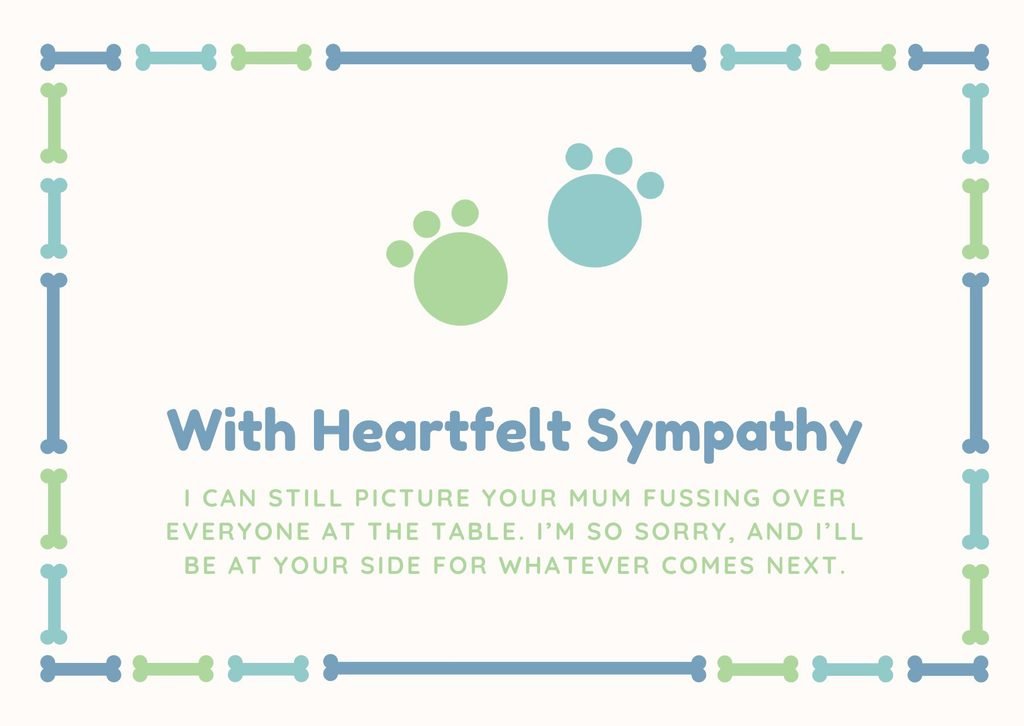
- I keep thinking about your mum’s cooking and the way she’d never let anyone leave hungry. I’m so sorry she’s gone.
- You don’t have to put on a brave face with me. Fall apart as much as you need.
- I’m coming over tonight. No talking required, I’ll just sit with you.
- Your mum always made me feel welcome. I’ll miss her too.
- Tell me one thing you’d like me to take off your plate this week, and it’s done.
- I’m here for the crying, the laughing, and the long silences.
- If you want to tell stories about her, I’ll listen all night.
- She raised the kindest person I know. That says everything about her.
- I know today feels impossible. Tomorrow I’ll be here too.
- Let me handle the phone calls so you don’t have to.
- You’ve been there for me in my hardest moments. Let me be there for yours.
- I wish I could hug you right now. Consider this message a very long one.
- Your mother loved you fiercely. I saw it every time she spoke of you.
- There’s no right way to grieve. Whatever you do, I’ve got your back.
- I’ll check in tomorrow, and the day after, and the day after that.
- I love you, and I’m so sorry. That’s all I’ve got, and I mean every word.
- I’ll take care of lunch this week. Please let me.
- Your mum’s laugh is something I’ll never forget. I’m so sorry.
- You’re not a burden, and you don’t have to be okay. I’m here.
- Anytime you need to talk about her, I’m ready to listen.
Messages for a Colleague, Employee, Boss, or Team
Workplace condolences should be respectful, warm, and free of pressure about work. The goal is to show care while giving the person room to grieve.
To a colleague
- I was very sorry to learn of your mother’s passing. Please don’t think about work for now.
- Our thoughts are with you and your family. We’ll manage everything here.
- Sending you my condolences. Please take whatever time is needed.
- I’m deeply sorry for your loss. If I can cover anything for you, just say the word.
- Wishing you and your family comfort. Don’t rush back.
- We’re thinking of you. Look after yourself and those close to you.
- It was hard to hear about your mother. Please accept our heartfelt sympathy.
From a manager to an employee
- Please accept my deepest sympathy. Your only job right now is to be with your family.
- We’ll take care of your responsibilities while you’re away. Take all the time you need.
- You are valued here as a person first. Be well, and come back when you’re ready.
- I’m so sorry for your loss. Please reach out if there’s any support I can arrange.
- Our whole team is with you. Let us know how we can ease things.
- Take care of yourself and your family. We’ll be here when you return.
To a boss or senior
- With sincere sympathy on the loss of your mother. You and your family are in my thoughts.
- I was saddened to hear this news. Please accept my respectful condolences.
- May you find strength and comfort in the support of those around you.
- Our thoughts are with you at this difficult time.
From a team or department
- Dear [Name], everyone at [Company] is sending you love. Please take the time you need. We’ll be here.
- On behalf of the whole department, we offer you our sincere condolences. Your wellbeing comes first.
- We are all thinking of you and your family. No need to worry about anything at work.
Messages for Siblings, Relatives, and a Spouse
When you share the loss, your message is not only comfort. It is also solidarity. You are grieving the same person from a slightly different angle.
Between siblings
- We both lost our anchor. Let’s be each other’s shelter now.
- I’m hurting too, and I’m so glad I’m not going through this without you.
- Mum would want us to stay close. I’m just a call away, always.
- I keep hearing her voice in my head. Do you? Let’s talk about her tonight.
- We’ve got each other, and we’ve got her love. That’s a lot to hold on to.
- Cry, rant, remember. We’ll do it all together.
- She was proud of both of us. Let’s make her proud now, one day at a time.
- I’ll handle the arrangements with you. You don’t have to carry this alone.
- No one else knows what this feels like quite the way you do. I’m with you.
- Our childhood home lives on in us. So does she.
From extended family (aunts, uncles, cousins, in-laws)
- Your mother was the glue of our family. We’re all grieving with you.
- Please let us help with whatever is needed. We’re family, and we stand together.
- Our door is open to you at any hour of the day.
- She was a wonderful sister, a loving aunt, and a gracious woman. She’ll be missed.
- Our prayers are with you and your siblings.
- We’ll keep her stories alive when we gather. She’ll always be part of our table.
- Sending love from all of us. You are not alone in this.
- We are heartbroken for you, and we’re here.
- Her warmth touched all of us in the family. Thank you for sharing her with us.
- Whatever you need, you only have to ask. We’ll come.
To a spouse or partner who has lost their mother
- I loved her too, and I’m hurting with you. Let me carry what I can.
- I’ll be right beside you through every moment of this.
- You don’t have to explain what you feel. I’m here for all of it.
- Your mother’s love is part of what made you the person I love. Thank you to her, always.
- I’ll take care of the details. You just take care of your heart.
Faith-Based and Spiritual Messages
For people who find comfort in faith, a spiritual message can be deeply meaningful. Use these only when you know the recipient shares or welcomes that perspective.

- May the Lord hold your mother in His peaceful arms and hold you in His comfort.
- God’s love surrounds you today and always. Praying for you.
- May she rest in peace, and may you rest in His grace.
- Our prayers rise for her soul and for your family’s healing.
- May the Lord who walks with the grieving walk with you now.
- Her faith inspired us all. May it now be a quiet strength for you.
- May light shine on her, and may light shine in your heart.
- We trust that she is at peace and that her love is not lost.
- May heaven welcome her warmly. May the earth be gentle with you.
- Praying that God grants you strength in each hour.
- May the memory of a righteous woman be a blessing to you.
- Holding you in my prayers as you commit your mother into God’s care.
- She loved with her whole heart. May that love keep guiding you.
- Trusting that peace awaits her, and that peace will come to you in time.
- May your sorrow be met with divine comfort.
Islamic Condolence Messages
In Muslim communities, expressing sympathy through duas (prayers) is a long-standing and heartfelt tradition. The following messages are suitable when the family is Muslim.
Traditional phrase: Inna lillahi wa inna ilayhi raji’un (Indeed, we belong to Allah, and indeed to Him we return).

- Inna lillahi wa inna ilayhi raji’un. May Allah envelop your mother in mercy.
- May Allah illuminate her grave and make it spacious and peaceful.
- Please accept my condolences. May Allah grant you the patience that He loves.
- May Allah accept her prayers, fasting, and every act of kindness.
- Praying that your mother is among those with the best company in Jannah.
- May Allah ease her accountability and shower her with His forgiveness.
- May Allah make your grief a path to reward and your patience a source of peace.
- I’m making dua for your mother after every prayer. May Allah grant her Firdaus.
- A mother’s duas are a treasure. May Allah continue to bless you through them.
- May Allah grant your family sabr-e-jameel and reunite you all in Paradise.
- Her kindness will be a sadaqah jariyah for her. May Allah multiply it.
- We are praying for her maghfirah and for your heart to find calm.
- May Allah replace your sorrow with serenity and her absence with His closeness.
- May Allah grant her a place beneath the shade of His mercy.
- May Allah give you the strength to walk through this with faith and dignity.
A thoughtful gesture: Many people also offer to recite the Quran, give sadaqah on the mother’s behalf, or arrange a dua gathering. These acts are considered ongoing charity for the departed and can be a source of real comfort to the family.
Messages After a Long Illness
When a mother has been unwell for a long time, her loved ones often feel a confusing mix of sorrow, exhaustion, and relief. A good message honours both the loss and the long road that came before it.
- You stood by her through every difficult day. That devotion is a rare gift.
- I hope you can finally exhale. She is at peace, and you’ve earned rest.
- After so much strain, grief may feel heavy and strange. All of it is okay.
- She was lucky to have you by her side. Thinking of you with admiration.
- Her struggle has ended, and your love for her never will.
- You did everything you could, and she knew it with all her heart.
- I’m sorry for the long road and for how it ended. I’m here for the next part.
- Please be as kind to yourself as you were to her.
- May the exhaustion lift in time, and may only the good memories remain.
- Her last chapter was made gentler by your care. Never doubt that.
- It’s normal to feel both relief and sadness. Neither means you loved her less.
- Sending you rest, comfort, and a lot of love.
Messages After a Sudden Loss
An unexpected death can leave a person in shock, with no time to prepare and no chance to say goodbye. Messages here should be especially gentle and should avoid pushing the person toward “closure.”
- I’m so shocked and so sorry. Please lean on me however you need.
- Nothing prepares us for news like this. I’m right here.
- There’s no need to understand anything today. Just let people take care of you.
- Her love was complete in every moment, even the unfinished ones.
- I can’t imagine the shock. Sending you the gentlest strength.
- The suddenness is so cruel. I’m holding your family in my heart.
- You don’t have to be strong or sensible right now. Just be.
- Please let me help with the immediate things like calls, food, and rides.
- She was so vibrant. My heart is broken for all of you.
- The unanswered questions will be heavy for a while. I’ll help carry them.
- Take each hour as it comes. I’ll be here through all of them.
- May the people around you form a soft place to land.
Messages for Someone Who Lost Their Mother Young
Losing a mother in childhood, adolescence, or early adulthood carries a particular ache. The person may feel robbed of future milestones: graduations, weddings, ordinary Tuesday-afternoon advice. Be tender, and avoid platitudes like “she lived a full life.”
- You deserved more time with her, and I’m so sorry you didn’t get it.
- Her love for you was huge, and it remains in everything you do.
- Missing a mother while growing up is a special kind of ache. I’m here for it.
- She is part of every goal you chase and every kindness you show.
- It’s okay to be angry, confused, or numb. All of it makes sense.
- I’ll be cheering for you at every milestone she can’t attend.
- You are surrounded by people who love you. Let us show it.
- Her heart beats on in the person you are becoming.
- I’m not here to replace her, only to walk next to you.
- Whenever you want to talk about her, I’ll always make time.
For a child
Keep it simple, loving, and honest. Avoid phrases like “she went to sleep” or “we lost her,” which can confuse young children.
- I’m so sorry your mommy died. She loved you very much, and that love stays with you.
- It’s okay to cry, and it’s okay to play. Both are okay. I’m here for hugs anytime.
- Your mum will always be your mum, and you can talk about her whenever you like.
Messages From Someone Who Has Lost a Mother Too
If you have walked this road yourself, your words carry a unique credibility. You can offer something no one else can: proof that people survive this.
- I know this pain intimately, and I’m sorry you have to feel it too.
- No timeline works here. Take your own pace, and I’ll keep you company.
- The first holidays are hard. I’ll be thinking of you through them.
- You’ll find small things that remind you of her, and they’ll hurt and heal at once.
- I still reach for the phone to call my mum sometimes. If you do too, I understand.
- Grief changes shape but love holds. I promise you that.
- Don’t be afraid of the waves. I’ve ridden them, and you will too.
- If you’d like to share a memory or cry in silence, I’m here for either.
- I won’t tell you it gets easier fast, but I’ll tell you it gets gentler.
- You can say anything to me. I’ve been in this dark room too.
Caution: Share your experience briefly. The message should stay focused on them, not turn into your own story.
Messages for Sympathy Cards
Cards offer a little more space than a text, and a handwritten note often gets kept for years. Aim for three to five lines, written in your own handwriting if possible.

- In loving memory of your mother. May comfort find you each day.
- With a heavy heart and a warm hug, I send my deepest sympathy.
- Her gentle strength was an inspiration. We’re thinking of you.
- May the love that surrounded her now surround you.
- Remembering a remarkable woman and holding you close.
- Though words are never enough, please know how deeply we care.
- Your mother’s grace and generosity will long be remembered.
- Wishing you peace as you honor her life.
- We are so sorry for your loss, and we’re here with open arms.
- With heartfelt sympathy during this time of sorrow.
- May tender memories ease your heart in the days to come.
- She brought joy to so many, and your family is in our thoughts.
- Thank you, dear friend, for sharing your remarkable mother with the world. We’re holding you in our hearts.
- Her warmth and wit were unforgettable. We’ll treasure the memory of her.
- With love and respect for a beautiful mother and the family she cherished.
Signing off: Closings such as “With deepest sympathy,” “Thinking of you,” “With love,” and “Warmly” all work. Choose what feels natural for your relationship.
Public comments should be brief, respectful, and free of personal details the family might not want broadcast.
- Rest in peace, dear mum. Sending love to the family.
- So sorry to hear this news. Thinking of you.
- May her memory be a blessing. Sending strength.
- Heartbroken for you. Take care of yourself.
- Sending you peace and healing.
- Our hearts are with you and your family.
- She lives on in every life she touched. Love to you.
- Praying for comfort for all who loved her.
- Thank you for sharing her story. She sounds incredible.
- Holding your family in light and love.
- Wishing you tender care in the days ahead.
- Gentle thoughts to you today and always.
Social media etiquette:
- Avoid asking for details about how she died.
- Do not post photos of the family or the funeral without permission.
- If you want to say something deeper, send a private message instead.
- Resist the urge to tag others in the comment unless the family has already done so.
Messages for Later: Weeks, Birthdays, Festivals, and Anniversaries
Grief does not end after the funeral. In fact, many people feel the support quietly vanish just when they need it most. A message sent weeks or months later can mean more than the first ones.
A few weeks or months later
- It’s been a few weeks, and you’ve been on my mind. How are you doing today?
- I’m not expecting a reply. I simply wanted you to know I’m still here.
- Thinking of you this month. Grief can hit hardest after everyone else has gone home.
- I’m making tea and sending you a virtual cup. Hoping today is gentle.
On her birthday
- Today would have been her birthday. I’m remembering her with so much love.
- Light a candle or share a story today if that feels right. I’m thinking of you both.
- Happy birthday to your wonderful mum, wherever she is. Thinking of you.
On Mother’s Day
- Mother’s Day can be tough. Sending you tender thoughts today.
- Today might feel heavy, and that’s okay. I’m here.
- For everyone who carries a mother in memory, this day belongs to you as well. Love to you.
On the first anniversary
- One year on, I’m remembering her warmth and your strength.
- The first anniversary is a milestone nobody wants. I’m here to walk through it with you.
- Something reminded me of your mum today and made me smile. I thought I’d share that with you.
During festivals and special occasions
- Eid, Christmas, Diwali, or any ordinary Tuesday, I know she’s missed. Thinking of you.
- At every festival, her empty chair is felt. I’m sending you an extra dose of love.
- Years may pass, but her love is not diminished. Holding you in my heart today.
Messages for Mother-in-Law, Stepmother, Adoptive Mother, and Complicated Relationships
“Mother” means different things to different people. A thoughtful message respects the specific bond, and never questions how “real” it was.
- I’m sorry about the loss of your mother-in-law. She was so kind to me. Thinking of the whole family.
- Losing a mother-in-law is losing a second mother. I’m so sorry.
- Your stepmother’s love for you was deep and real. I’m sorry for this loss.
- Family isn’t only about blood. Your adoptive mother chose you, and her love was a choice she made daily. I’m sorry.
- She was your foster mother, and her love changed your life. I’m so sorry.
- Your grandmother raised you like a mother. Her loss is a mother’s loss. I’m here.
- Mothers come in many forms, and the one who raised you is no less your mother. I’m sorry.
- She was a mother to so many beyond her own children. Her loss is felt widely.
- I know your relationship with her wasn’t always simple. Whatever you’re feeling now is valid. I’m here.
- Grief can be complicated. Please don’t judge your feelings. I’m just here to listen.
Messages When You Cannot Be There in Person
Distance, work, illness, or travel can keep you away from the funeral or prayer gathering. Say so honestly and offer another form of presence.
- I’m so sorry I can’t be there in person. My heart is with you.
- Distance is keeping me away, but I’m thinking of you every moment.
- I’ll call tonight whenever you’re ready. If not, I’ll call again tomorrow.
- I couldn’t make it, but I’ve arranged a meal for your family. Please accept it with my love.
- I wish I could hug you today. Consider this message a hug.
- I’m joining the prayers from afar. You’re not alone.
- I’m sorry for not being there. Let me know when I can visit.
- Although we’re apart, my support is with you.
- Video call whenever you want, even if just to sit together in silence.
- I’ll be there as soon as I can. Until then, my love is with you.
Notes to Attach to Flowers and Gifts
A small card with flowers, a plant, or a food basket should be brief. A single line is enough.
- With love and sympathy. May these flowers bring a little peace.
- Thinking of you with every petal. Warmest condolences.
- For you and your family, with deepest sympathy.
- May this small gift remind you that you’re cared for.
- A little something to say I’m thinking of you.
- In memory of a lovely woman. With affection.
- Flowers fade, but love doesn’t. Sending both.
- Enclosed with my heartfelt condolences.
- In loving memory of your mother. Thinking of you.
- May this plant grow as your memories of her do.
Original Comforting Lines About a Mother’s Love
Sometimes a gentle reflection works better than a standard condolence. These short lines can be used in a card, a longer message, or a quiet note.
- A mother’s love is the first language we learn and the last we ever forget.
- She taught us to walk, and now her love teaches us how to keep going.
- The people who raise us never truly leave. They move into our habits, our laughter, and our hearts.
- The size of the ache is the measure of how much she was loved.
- A mother’s care is stitched into everything we become.
- We carry our mothers in the way we cook, comfort, and care for others.
- Some voices stay with us long after they have gone quiet.
- Her arms may be gone, but the warmth of her embrace remains.
- A house becomes a home through a mother’s love, and that home still lives in you.
- She did not leave without leaving something behind: a way of loving.
- What she planted in you will keep blooming.
- Every act of kindness you do is a continuation of her.
- Her love was never a loan. It was a gift that cannot be taken back.
- Missing her is just love finding new ways to speak.
- A mother’s story doesn’t end. It continues in the lives she shaped.
How to Personalise Any Message (Fill-in-the-Blank Templates)
A personal detail turns a good message into a memorable one. Use these templates, or simply add one line from the list below to any message above.
Templates:
- “I’ll always remember [her kindness / her laugh / her cooking / the way she welcomed everyone]. I’m so sorry for your loss.”
- “[Name], your mother meant so much to [you / our family / everyone who knew her]. Thinking of you today.”
- “I still remember when she [shared a specific memory]. It says everything about who she was.”
- “She was so proud of you, especially when she talked about [your achievement / your family / your kindness].”
- “I’m here for you. I’ll [bring dinner / call on Sunday / sit with you] whenever you’d like.”
Personal details that work well:
| Type of detail | Example |
|---|---|
| A quality | Her generosity, her humour, her patience, her faith |
| A memory | A meal, a piece of advice, a kind gesture, a celebration |
| A habit | The way she greeted guests, the songs she hummed, her morning routine |
| A tribute to the child | “You have her kindness.” “You carry her strength.” |
| A concrete offer | “I’ll bring dinner on Thursday.” “I’ll drive you to the service.” |
What Not to Say
Good intentions sometimes produce hurtful words. Avoid these common slips:
- “She’s in a better place.” Not everyone believes this, and it can feel dismissive.
- “At least she lived a long life.” Length of life does not shorten grief.
- “I know exactly how you feel.” Even if you have lost a mother, every grief is unique.
- “Everything happens for a reason.” It often sounds like an attempt to explain away pain.
- “You need to be strong for your family.” Grieving people do not owe anyone strength.
- “Let me know if you need anything.” This hands the work back to the grieving person. Offer something specific instead.
- “At least you still have…” Comparisons never comfort.
- “It’s time to move on.” There is no deadline for grief.
- “She wouldn’t want you to cry.” Tears are natural, and nobody should be told how to mourn.
- “What happened?” Unless the family brings it up, details are not yours to ask for.
Better alternatives: “I’m so sorry.” “I’m thinking of you.” “She was loved.” “I’m here to listen.” These simple statements are almost always enough.
Ways to Help Beyond Words
A message is a beginning. Practical help can be the most valuable thing you offer, because grieving people are often exhausted and overwhelmed by tasks.
- Bring a meal or send a food delivery. Choose something easy to reheat and in a disposable container.
- Handle small chores: school pickups, grocery runs, pet care, laundry.
- Help with logistics: answering calls, managing guests, or sorting paperwork.
- Attend the funeral or prayer gathering if you can. Your presence matters even if you say nothing.
- Send flowers or a small plant with a short note.
- Check in regularly: a weekly message for the first few months can be a lifeline.
- Listen without fixing. Let them tell the same story many times if they need to.
- Share a memory of their mother in writing. Families often treasure these later.
- Donate in her name to a cause she cared about, if appropriate.
- Mark the calendar for her birthday, Mother’s Day, and the anniversary, so you can reach out when others forget.
25. Etiquette: Timing, Channel, and Length
| Question | Guidance |
|---|---|
| When should I send it? | Ideally within a few days of hearing the news. A late message is always better than none. |
| Text, call, or card? | A text is fine for most relationships. Close relationships deserve a call or visit. A handwritten card feels especially thoughtful. |
| How long should it be? | Two to four sentences. One sincere line is enough when you’re short on words. |
| Should I follow up? | Yes. A second message a few weeks later often means the most. |
| What if I don’t hear back? | Don’t take it personally. Grieving people may not reply for weeks. |
| Should I mention the cause of death? | Only if the family has shared it with you openly. |
| Is humour acceptable? | Only if you know the family well and the humour was part of how they remembered her. When in doubt, skip it. |
Frequently Asked Questions
What is a good short sympathy message for loss of mother?
A good message is simple, sincere, and kind. For example: “I’m so sorry for the loss of your mother. Thinking of you and your family with love.” You can always add a personal memory to make it feel more special.
How long should a condolence message be?
Two to four sentences are usually perfect. A short message that arrives on time is better than a long one that is delayed because you were searching for the right words.
Is it okay to send a sympathy message by text?
Yes. Text messages are widely accepted, especially for friends, colleagues, and acquaintances. For very close relationships, a phone call or visit may mean more, but a text is a perfectly respectful way to reach out.
How soon should I send a sympathy message?
Ideally within a few days of learning the news. If you are late, send it anyway. A simple “I’m sorry I’m only now reaching out” is enough.
What should I write if I didn’t know her mother?
Keep it focused on your care for the person. For example: “I never had the chance to meet your mother, but I can see how much she meant to you. I’m so sorry, and I’m here if you need anything.”
Should I mention how she died?
Generally, no, unless the family has openly shared the details with you. Keep the focus on comfort, not circumstances.
Can I include a Bible verse, Quran verse, or dua?
Yes, if you know the family shares that faith or would appreciate it. If you are unsure, a warm and non-religious message is a safer choice.
What if I cannot attend the funeral?
Send a message, a card, or flowers, and explain gently that you couldn’t be there in person. Messages #251–260 are written for this situation.
Do I need to reply to sympathy messages?
As the sender, never expect a reply. As the receiver, there is no obligation to respond immediately, and most people understand if it takes time.
What if my relationship with the person is difficult?
Stick to simple, genuine words, such as “I’m sorry for your loss. Thinking of you.” You do not have to pretend closeness to be kind.
What do I say to someone whose mother had a difficult relationship with them?
Do not assume the grief is simple or absent. Try: “I’m sorry for your loss. However you’re feeling, it’s okay, and I’m here to listen.”
Can I send a sympathy message to a group chat?
Yes, but keep it brief and respectful. For deeper thoughts, send a private message to the person grieving.
Final Thoughts
Writing a sympathy message for the loss of a mother is never about finding perfect words. It is about reaching toward someone who is hurting and letting them know they are not alone. Whether you choose one gentle line, a heartfelt paragraph, or a handwritten card, the intention behind it is what matters most.
Remember these simple principles:
- Reach out early, and keep reaching out. Grief lasts far longer than the funeral.
- Keep it short, sincere, and personal. A single true sentence outweighs a page of formality.
- Avoid clichés that minimise the pain. Comfort comes from acknowledgement, not explanation.
- Back your words with presence. A meal, a call, or a quiet visit can say what language cannot.
- Let them grieve in their own way. There is no correct timeline and no correct emotion.
A mother’s love leaves a mark that no loss can erase. When you send even a few kind words, you help that love be remembered, and you help the person who carries it feel a little less alone.
If you are reading this because you are grieving your own mother, please be gentle with yourself. Whatever you feel today is allowed. And if you are reaching out to someone who is, you are already doing the most important thing: showing up.

Hi, I’m Hudson Reed, and I write for WishlyMsg.
I believe the best messages aren’t the fanciest ones. They’re the ones that sound like a real person who actually cares. That’s the idea behind everything I write here: birthday wishes, anniversary notes, congratulations, thank-you messages, and more.
I’ve always been the person friends and family come to when they can’t find the right words for a card, a toast, or a late-night text. Over time, that turned into a habit of collecting phrases, noticing what makes a message feel warm, and writing my own. Now I get to share that with you.
Every article on WishlyMsg is written fresh, with real people and real moments in mind. My goal is simple: help you say what you feel, in a way that sounds like you.
If a message I wrote helps you make someone smile, tear up, or feel a little more loved, then I’ve done my job.
Thanks for stopping by. 💛